


What faux suede is and why it marks
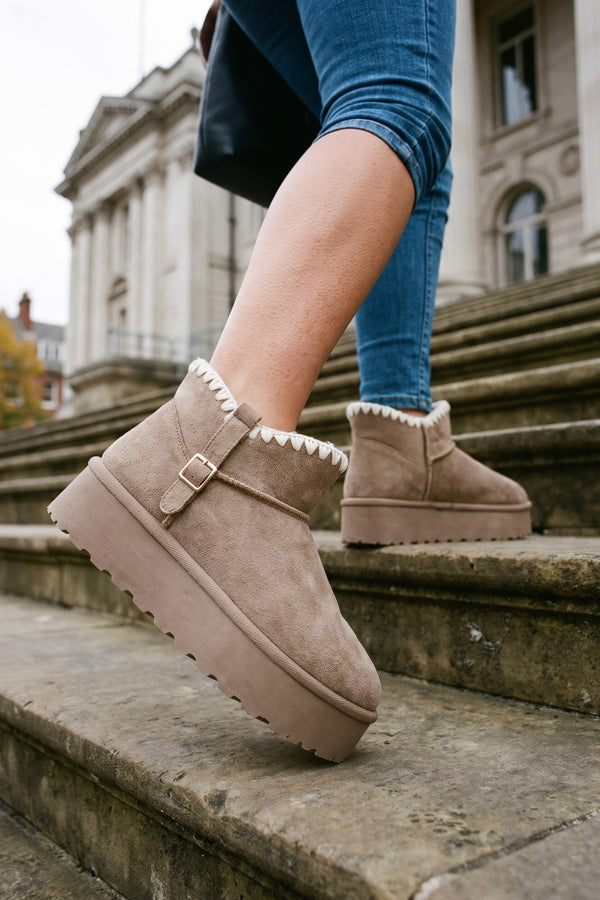
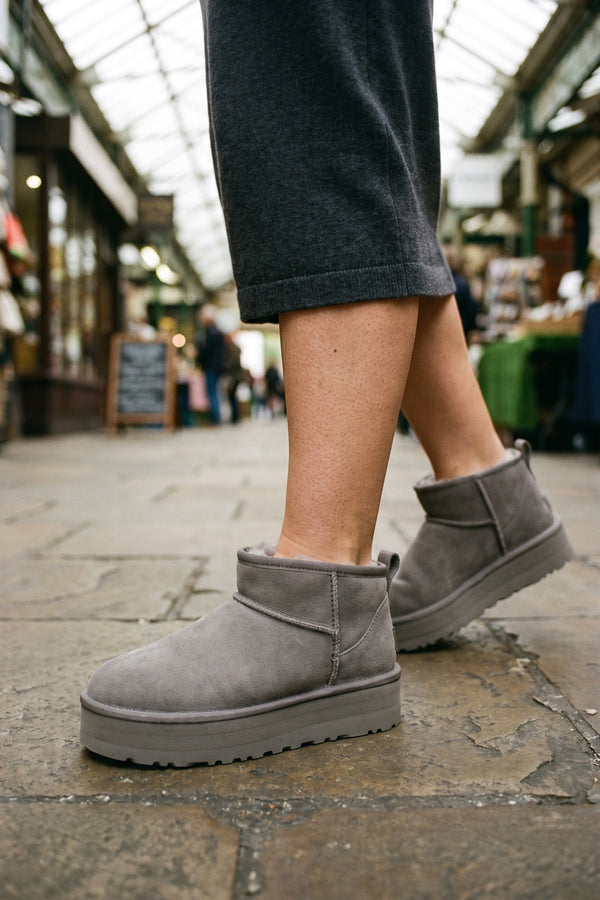
How to clean faux suede boots starts with understanding the fabric. Faux suede is a textile with upright fibres that create a soft, napped surface. That texture catches dirt, water and oils more easily than smooth finishes.
Rain darkens the nap. Splashes leave tide marks. Salt from pavements leaves white streaks. Most marks come out with the right method and a bit of patience.
Shop Women's Faux Suede Boots
Shop all


Protecting new boots
Spray new boots with a faux suede protector before you wear them. Test it on a hidden spot first, wait an hour, then check the texture and colour. If it looks fine, spray the whole boot in a well-ventilated room, holding the can about fifteen centimetres away.
Let them dry overnight. The spray forms a barrier that helps water bead off instead of soaking in. It will not make your boots waterproof, but it gives you a few extra seconds to shake off droplets before they set.
Reapply every few weeks if you walk through wet streets often. Spray lightly and evenly. Too much product can stiffen the nap or leave a shiny patch.
Brushing and how to clean faux suede boots
Brush your boots after each wear with a soft suede brush or a clean toothbrush. Stroke in one direction to lift the nap and remove surface dust. This takes about thirty seconds and stops dirt embedding.
For scuffs, rub gently in a circular motion with the brush. The friction lifts flattened fibres. Stubborn marks respond to a damp cloth: wring it out until it is barely wet, wipe the mark, then brush the area while it is still damp to restore the texture.
Avoid soaking the fabric. A little moisture is fine, but saturation can loosen the backing or warp the shape. Tackling a larger stain means working in small sections and letting each one dry before moving on.
Shop Ankle Boots
Shop all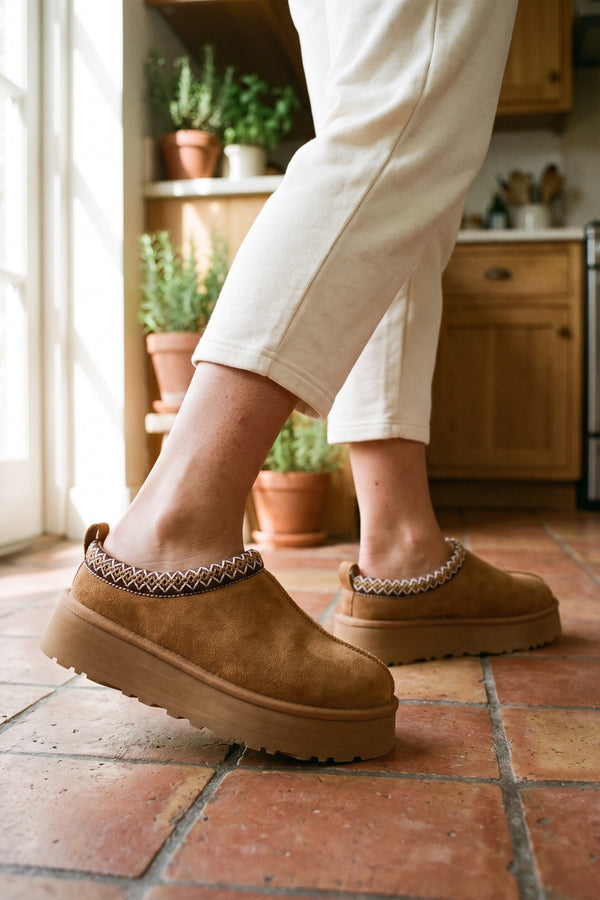
Rain, salt and drying
If your boots get soaked, stuff them with newspaper or kitchen roll as soon as you get home. Change the paper every couple of hours. This pulls moisture out and holds the shape while they dry.
Leave them at room temperature, away from radiators. Heat can crack the material or shrink the lining. Drying slowly is better. Once they are dry, brush the nap to lift any flattened areas and even out the colour.
Salt marks show up as white lines around the ankle or toe. Wipe them off with a damp cloth before they set. If the salt has already dried, dampen the whole boot lightly so the waterline blends in, then let it dry and brush. Our guide to caring for faux leather covers similar stain removal methods.
How to waterproof suede boots is a question of prevention, not cure. Regular spraying helps, but faux suede will always mark if you stand in puddles. Save your best tan and brown styles for dry days and keep a smooth pair for heavy rain.
Storing boots in summer
Clean and brush your boots before you pack them away. Any dirt left on the nap can attract moths or set into permanent marks over the months.
Stuff them with tissue or boot shapers to hold the shaft upright. Store them in a cool, dry cupboard, not a damp garage or loft. If you have space, keep them in fabric dust bags to stop them rubbing against other shoes.
Check them once mid-season. A quick brush and a blast of air keeps them fresh. You will thank yourself in September when you pull them out ready to wear.
When to replace them
Faux suede wears out faster than smooth finishes. The nap flattens with friction, especially at the heel counter and toe box. Once the texture is gone, brushing will not bring it back.
Replace your boots when the surface looks shiny or bald, the stitching frays, or the sole separates. A season or two of heavy wear is typical for everyday pairs. Occasional-wear boots last longer.
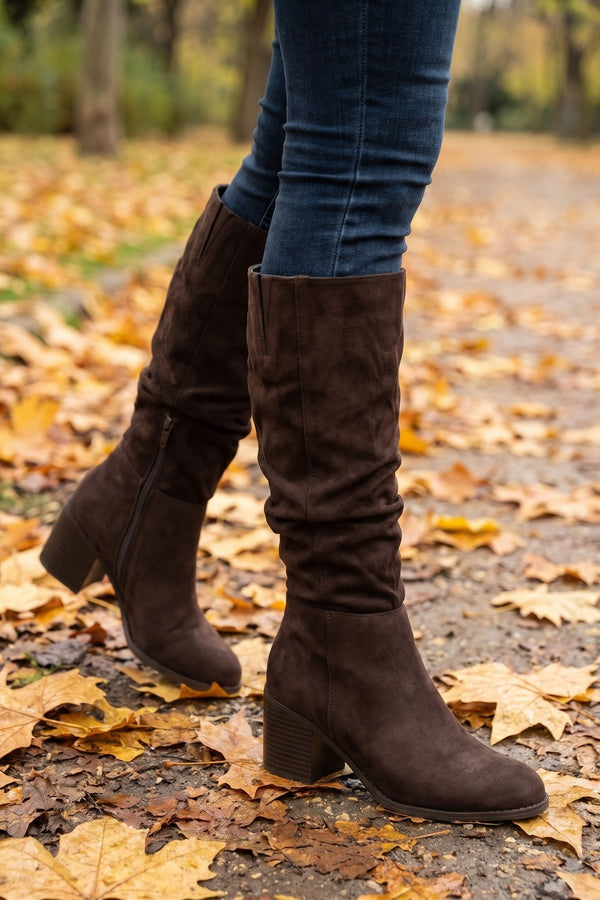
How to care for suede boots extends their life, but nothing lasts forever. Rotate two pairs if you wear them for your commute, so each gets a day to air out between wears.
Shop Brown Suede Boots
Shop all
Frequently asked questions
Can you wash faux suede boots?
Do not put faux suede boots in the washing machine. The agitation and water can damage the nap, warp the shape and loosen seams. Spot-clean marks with a damp cloth and a soft brush instead. For deeper cleaning, wipe small sections at a time, let them dry, then brush to restore the texture.
How do you get water marks out of faux suede?
To remove water marks from faux suede, dampen the whole boot lightly with a cloth wrung out until barely wet. This evens out the waterline so it blends in as it dries. Let the boots dry at room temperature, then brush the nap in one direction to lift the fibres and restore the finish.
Can you waterproof faux suede?
You cannot make faux suede fully waterproof, but a protector spray helps water bead off the surface instead of soaking in. Test the spray on a hidden area first, then apply it evenly before the first wear. Reapply every few weeks if you walk in wet conditions often. It reduces marking but will not stop heavy rain.


