


Look and finish
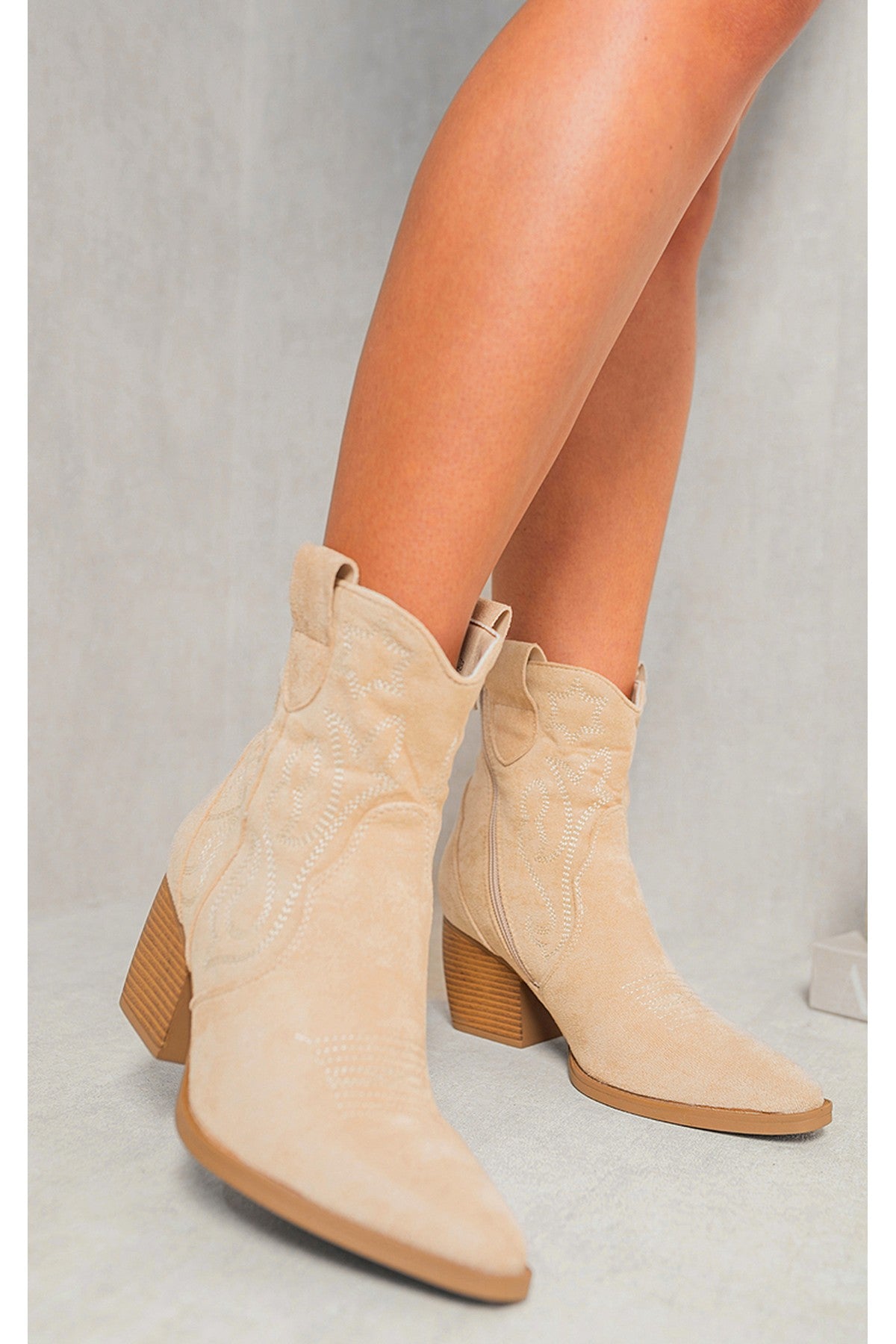
The faux suede vs faux leather boots question starts with how they look on your foot. Faux suede has a soft, matte nap that catches the light gently and feels tactile when you run your hand over it. It reads as relaxed, slightly bohemian, and suits knee-high styles or ankle boots with a block heel. Faux leather brings shine and structure. It holds a clean line, looks polished straight out of the box, and works when you want something sharper for the office or dinner.
Neither looks cheap if the finish is even and the stitching lies flat. Faux suede shows wear sooner because the nap flattens where it creases, especially around the ankle and across the toe box. Faux leather keeps its shape longer but develops creases that catch dust if you bend the boot in the same spot repeatedly.
Shop Women's Faux Suede Boots
Shop all



Rain and mud: which copes better
Faux leather wins when the pavement is wet. Water sits on the surface and you wipe it off with a damp cloth once you get home. The material dries quickly and does not change colour or texture after a soaking. If you commute through drizzle or across muddy grass to the office car park, faux leather keeps going without fuss.
Faux suede absorbs moisture and the nap darkens where water hits. Puddles leave tide marks that take time to fade, and mud clings to the texture. You can treat faux suede boots with a protective spray, but reapplication every few weeks is necessary and the finish never matches the water resistance of faux leather. Save suede for dry autumn days and indoor venues. If the forecast mentions rain, reach for faux leather.
Shop Women's Faux Leather Boots
Shop all


Care and cleaning
Faux leather needs a quick wipe with a damp microfibre cloth after each wear and a gentle cleaner every couple of weeks if you wear the boots daily. Dirt does not stick deeply because the surface is smooth. You can tackle scuffs with a cotton bud dipped in a tiny amount of moisturiser, rubbed gently over the mark. The whole process takes under five minutes.
Faux suede boots care demands more patience. Brush the nap with a soft suede brush after every few wears to lift dust and keep the texture even. Stains need a specialist cleaner or a suede eraser, and you work in small circles to avoid flattening the fibres. Wet patches dry slowly, and you stuff the boots with newspaper to hold their shape while they air out away from direct heat. If low maintenance matters, leather is easier.
Comfort and breaking in
Faux leather starts stiff. The first few wears press against your ankle bones and the back of your heel, and you might need plasters until the material softens. Thick socks help during the breaking-in phase, which lasts about a week of regular wear. Once the boots mould to your foot shape, they stay comfortable and supportive for months.
Faux suede feels softer immediately. The nap gives slightly when you walk, so there is less friction against your skin and no sharp edges. You can wear them for a full day without discomfort from the start. The trade-off is that the material stretches more over time, especially around the calf or ankle, and the fit can loosen after a season of heavy wear.
Which suits which outfit
Pair faux leather with anything that needs a clean line. Slim black trousers, midi skirts with a tucked-in jumper, or a wool coat over jeans all work because the shine and structure balance softer fabrics. Black faux leather boots in a knee-high or ankle style anchor an outfit without adding visual weight. The finish also suits evenings when you want something that holds its own under pub lighting or at a restaurant.
Faux suede softens tailoring and adds texture next to denim or cord. Brown faux suede boots look good with wide-leg trousers in camel or charcoal, and they work under a midi dress with tights when the weather stays dry. The matte surface keeps the overall look relaxed, which suits weekend plans more than Monday morning meetings. Our guide to styling knee-high boots covers more pairing ideas if you are building a capsule wardrobe around one pair.
Shop Brown Suede Boots
Shop all

Faux suede vs faux leather boots: which to buy first
If you are choosing between suede or leather boots for a first pair, consider your commute and how often you check the weather app. Faux leather handles the unpredictability of British autumn and winter better. It works across more occasions, from the office to a bar after work, and the lower maintenance means you actually wear them instead of leaving them in the wardrobe because rain is forecast.
Buy faux suede second, once you have a reliable everyday pair sorted. It adds variety to your rotation and suits specific outfits that need a softer finish. Two pairs let you alternate and extend the life of both, because neither material benefits from being worn on consecutive days without a chance to air out.
For daily wear, which boots are better in the rain comes down to faux leather every time. For weekends when the forecast is clear and you want something that feels more relaxed, faux suede adds texture and works beautifully with the rest of your autumn wardrobe.
Shop Women's Black Boots
Shop all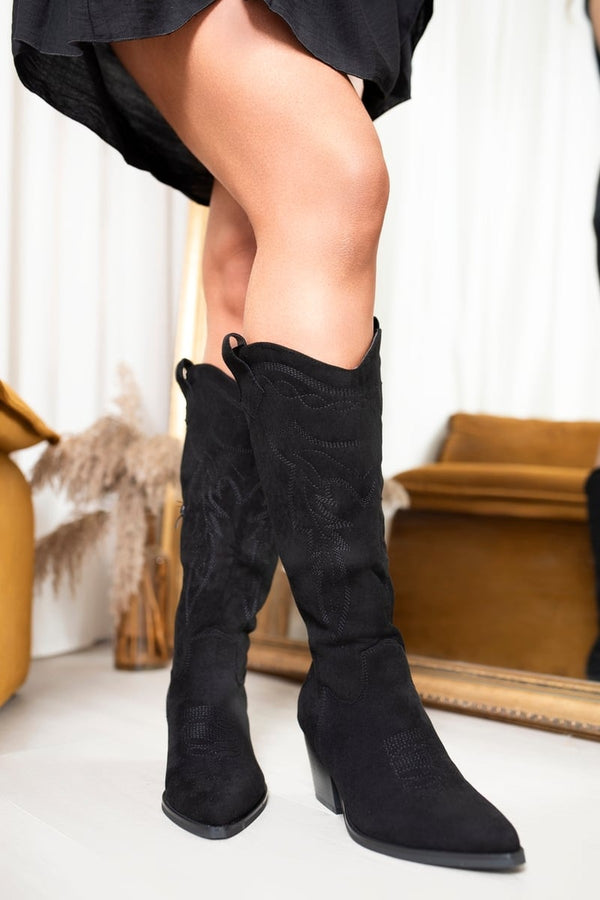


Frequently asked questions
Is faux suede waterproof?
Faux suede is not waterproof. The material has a textured nap that absorbs water, leaving dark patches and tide marks that take time to dry. You can apply a protective spray to add some resistance, but it needs reapplication every few weeks and does not stop heavy rain from soaking through. Faux leather handles wet weather far better if you need boots for unpredictable conditions.
Do faux leather boots crack?
Faux leather boots can crack if the material dries out or you repeatedly crease them in the same spot without care. Applying a small amount of moisturiser or a specialist conditioner every few weeks keeps the surface supple and prevents splitting. Avoid leaving them near radiators or in direct sunlight, as heat accelerates cracking. With basic maintenance, most faux leather boots last several seasons without visible damage.
Which is easier to clean, suede or leather?
Faux leather is easier to clean than faux suede. A damp cloth removes dirt and mud in minutes, and the smooth surface does not trap stains. Faux suede needs brushing after each wear, specialist cleaners for marks, and careful drying if it gets wet. If you want boots that need minimal effort between wears, faux leather saves time and keeps looking good with less work.


